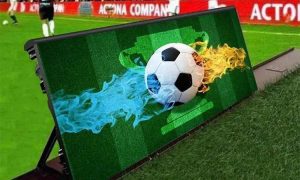
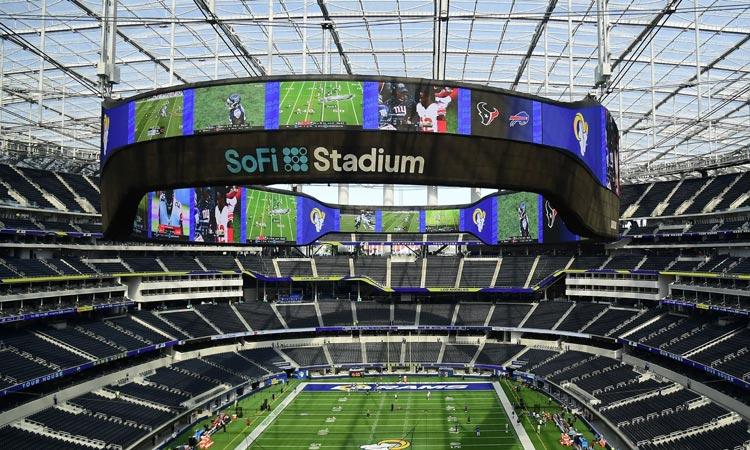
The price of an LED scoreboard depends on the pixel pitch, installation environment, and type of sport.
Pixel pitch
A P6 screen costs between $300 and $500 per square meter, while a P4 screen is 20% more expensive. However, since school stands are typically more than 15 meters from the field, a P6 screen is perfectly adequate. Last year, a high school initially budgeted for P4 screens, but I advised them to switch to P6 screens. The $4,000 they saved allowed them to install an additional screen, and now they have scoreboards behind their goals.
Installation method
Suspended installations cost $1,500 to $2,000 more than wall-mounted installations because they require additional steel structures and labor. However, if a pillar in the center of the field obstructs the view, a suspended installation is the only option. We once installed a wall-mounted screen in a community sports field in Manila to save on the cost of a suspended installation, but spectators sitting on the sides suffered from glare, so they later spent money to adjust the angle.
software
We provide basic control software free of charge for displaying scores and match times. However, if you require a connection to a live stream source or to play carousel ads, the professional version of the software costs an additional $500. The basic software is sufficient for 90% of schools' needs, unless you frequently have television crews filming your games.
Last month, a customer from the Philippines sent me photos, asking why the score on his newly purchased outdoor LED scoreboard was barely visible at noon. He had spent a considerable amount of money on it, and although the screen wasn't broken, it was almost impossible to see at noon, making it usable only for half a day. His friend had bought a cheaper one, but the waterproofing was poor, and it was damaged by water after two rainy seasons, costing $800 to repair—enough to buy half a screen.
LED Scoreboard Types and Specifications: How to Choose Without Wasting Money
Many customers immediately ask, "How much will it cost to install an LED scoreboard?" There are many types of scoreboards, and the price difference can be as much as tenfold. The standard price range for LED scoreboards in school and community gymnasiums is between $5,000 and $8,000.First, you need to clarify your needs: Do you just want to display scores, or do you want to generate revenue by playing ads? Do you want to permanently install it in one venue, or do you need to move it frequently?
| Comparison Table of LED Scoreboard Product Types and Specifications | |||||
| Product Type | Price range | Pixel pitch | Brightness (cd/m²) | Protection level | Applicable Scenarios |
| Single-color/two-color scoreboard | $1,000 - $4,000 | P10 | 800 / 5000+ | IP54 (indoor) / IP65 (outdoor) | Community sports fields, elementary school gymnasium, training hall |
| Full-color LED video scoreboard | $15,000 - $40,000 | P2.5 - P8 | Up to 7000 | IP65 - IP67 | University gymnasiums, commercial complexes, and professional stadiums |
| Modular LED Scoreboard | Customized by module | P2.5 - P16 | Depends on the scenario | IP54 - IP67 | Schools require a rapid delivery of venues |
| Portable LED Scoreboard | $1,000 - $3,000 | Depending on the model | Depends on the scenario | IP54 or higher | Temporary events, touring events, and branch campuses |
Scoreboard types
The most basic type is the digital LED scoreboard, also known as a monochrome or dual-color screen. It uses red or green LED bulbs and can only display numbers and simple text such as score, time, and quarter number. That's all. They cannot play videos, display advertisements, or show team logos. However, they are affordable, costing between $1,000 and $4,000. Since high resolution is not required for displaying only numbers, the pixel pitch is typically around P10. In terms of brightness, 800 cd/m² is sufficient for indoor use, while 5000 cd/m² or higher is needed for outdoor use. An IP54 protection rating is sufficient for indoor use, but outdoor installations must meet an IP65 protection rating. Ideal applications include community basketball courts, elementary school gymnasiums, and training facilities. These venues have limited spectators, no sponsors, and their primary goal is to ensure players can clearly see the score.
If your venue has sponsors or plans to recoup costs through advertising, we recommend using full-color LED scoreboards. These screens support RGB color mode, displaying over 65,000 colors and capable of displaying text, images, videos, and animations. During the game, the main screen displays the score, with sponsor logos on either side; advertisements play during timeouts, and highlights are shown during halftime. Pixel pitch ranges from P2.5 to P8; the smaller the pitch, the clearer the display, but the higher the cost. Prices start at $15,000, reaching up to $40,000 for large venues. While expensive, these displays have strong profit potential. University stadiums typically generate $10,000 to $25,000 in advertising revenue annually, with professional venues generating even more. Let's do the math: a single screen costs $30,000, while advertising revenue can recoup the investment within two years.
Modular LED Scoreboard
Another type is called a modular LED scoreboard, which is assembled from multiple independent small modules. Each module has a fixed size, and we customize the layout according to the module dimensions to meet customer needs. Module sizes range from P2.5 to P16; higher resolution modules are used indoors, while modules with larger pixel pitch are used outdoors. Its biggest advantage is ease of maintenance. If a traditional monolithic screen is damaged, the entire screen must be disassembled and sent back to the factory. With a modular system, you only need to unscrew four screws to replace the faulty screen. The obstacle module is all that's needed, so the competition can continue uninterrupted. Furthermore, there's no need for custom molds or waiting three months for a custom order. We assemble the modules from our inventory and deliver within a week. This is an excellent option for schools.
Installation method
Two installation methods directly impact the total cost. Fixed screens are mounted on walls or pillars, remaining permanently stationary. While robust, the initial installation requires steel framing, load-bearing assessments, and cabling. Outdoor pillars also require foundation work, and installation costs can account for 20% to 30% of the screen's price. Portable screens are battery-powered, equipped with wheels, and weigh between 20 and 30 kilograms. They can be moved by one person, have a battery life of 4 to 8 hours, and are ready to use upon arrival at the venue. Prices range from $1,000 to $3,000. Fixed screens are ideal for permanent venues, while portable screens are best suited for temporary venues and touring events. Many schools purchase both types of screens: fixed screens for the main stadium and portable screens for branch facilities and away games.
Functional compatibility
Finally, consider feature compatibility. The basic version only displays the score, time, and countdown, thus only suitable for a single sport. The multi-functional version integrates a 24-second shot clock, quarter indicator, foul count, timeout count, and ball control indicator. The software includes over ten sports modes and supports one-click switching between basketball, volleyball, and badminton modes. Before purchasing, be sure to confirm which sports the software supports.
Therefore, when choosing an LED scoreboard, the focus should not be on selecting the most expensive, but on choosing the one best suited to your venue. A monochrome digital model is sufficient for a community court; a modular basic model can be considered for a school gymnasium, while universities or commercial complexes with sponsors should opt for a full-color video display. First, clarify your needs, and then carefully review the specifications. This way, you won't exceed your budget.
Comparison of traditional digital LED scoreboards and LED video scoreboards
When purchasing LED scoreboards, basic digital models and full-color video models are often confused, but they differ significantly in display performance, technology, and investment costs. Understanding these differences is key to avoiding unnecessary expenditures.
Different chips
Basic digital LED scoreboards typically use monochrome or dual-color LED chips, with LED tubes or dot matrix modules as display units. They can display numbers, simple characters, and score information in a fixed format. Their technology is based on digital drive circuits, eliminating the need for video processing units, resulting in lower power consumption and a lower failure rate. They are perfectly adequate and reliable for simple scenarios requiring only the display of scores, timers, and match times. Typical viewing distances are 50 to 100 meters, making them suitable for small to medium-sized indoor venues such as school gymnasiums, community sports fields, and training facilities. Prices generally range from $1,000 to $4,000, and installation and maintenance costs are relatively reasonable, making them a high-value option for customers with limited budgets.
Different software
Full-color LED video displays are composed of RGB full-color pixels and equipped with a video control system and image processing software. They support the display of dynamic video, graphic animations, team names, player information, and sponsor advertisements. With brightness up to 7000 cd/m², a viewing distance of up to 100 meters, and protection ratings ranging from IP65 to IP67, they are suitable for large stadiums and outdoor event environments. These systems support remote control, multi-event rule configuration, real-time data integration, and multi-screen synchronization, offering functionality far exceeding that of basic models.
These functional differences directly determine their applicable application scenarios. The basic digital model meets basic needs such as scoring, countdown, and foul alerts, but does not support video playback, ad insertion, or multilingual content.
Differences in full-color video monitors
Full-color video displays integrate numerous advanced features, such as a 24-second shot clock, timeout count, ball control indicator, and foul count alert, and can be operated wirelessly. For professional leagues, university stadiums, and commercial complexes that rely on advertising sponsorships to recoup costs, the profit potential of video displays undoubtedly offers higher returns, while for venues primarily hosting training sessions or amateur matches without sponsors, inexpensive, basic digital displays are more attractive.
Different maintenance services
Because basic digital equipment has a simple structure and low modularity, it usually requires replacing the entire device. Full-color video equipment, on the other hand, uses a standardized modular design, allowing for quick disassembly and replacement of individual pixel modules. Combined with the remote diagnostic capabilities of the software platform, this significantly reduces long-term maintenance labor costs. However, the complexity of video control systems also requires operators to possess basic technical skills or rely on ongoing technical support from the manufacturer.
The choice depends on the venue's positioning and profitability. If the venue's core needs are cost-effectiveness, a single function, and hosting only one or two amateur events per week, then a basic digital LED scoreboard will suffice. If the venue's target customers are professional leagues, large events, or commercial operations, and it needs to enhance the viewing experience and revenue through advertising and video content, then a full-color video LED scoreboard is recommended. The price difference between the two is typically five to ten times, but a full-color video scoreboard can recoup its investment within two to three years through advertising revenue, after which it can achieve net profit.
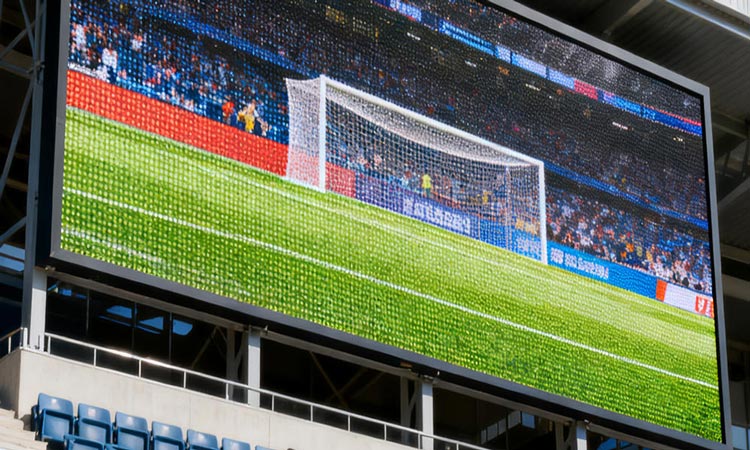
Indoor and outdoor LED scoreboard requirements
| Comparison Projects | Indoor LED Scoreboard Requirements | Outdoor LED Scoreboard Requirements |
| Brightness requirements | 500 - 1000 cd/m² | No less than 5000 nits, 7000+ is recommended for high-end events. |
| Protection level | IP54 is sufficient. | IP65 is the minimum standard; IP67 is recommended for coastal areas with high humidity. |
| Installation structure | For wall mounting or hanging, the roof's load-bearing capacity needs to be assessed. | Wind load calculations are required for column installation. |
| Material Requirements | Lightweight materials are the main components | Die-cast aluminum casing (coastal/high humidity), corrosion-resistant treatment |
| Perspective requirements | Both horizontal and vertical angles should not be less than 160°. | Both horizontal and vertical angles should not be less than 160°. |
| Glare control | Anti-glare treatment (automatic brightness adjustment) is necessary. | Generally, no special treatment is required. |
| Recommended pixel spacing | P4 - P6 | P6 - P10 |
| Basic functions | Score, real-time timer, countdown, quarter, fouls, timeout | Same as above, a multilingual display is also required. |
| drive circuit | Constant current drive chip | Constant current drive chip |
| Shipping Standards | A 72-hour aging test must be passed and a report provided. | A 72-hour aging test must be passed and a report provided. |
| Ease of maintenance | Lightweight design is a priority for facilitating high-altitude operations. | Modular design is preferred for quick on-site replacement. |
LED Scoreboard and Display Solutions for Sports
Indoor sports such as basketball, volleyball, badminton, and ice hockey place extremely high demands on the integration and functionality of display systems. These venues typically use a centrally suspended LED scoreboard (spherical screen) as the main display screen.
Large outdoor stadium
Outdoor sporting events such as football, rugby, and track and field operate in complex environments with large audiences, placing extremely high demands on the weather resistance and visibility of equipment. These venues typically feature large outdoor LED scoreboards on either side or at the four corners of the stadium for live game broadcasts, replays, and key data. Circular LED screens (such as those used in football stadiums and sports fields) are also deployed around the stadium to display advertisements, slogans, and special effects videos to enhance the atmosphere. Strip screens can also be added to the stands to expand information coverage. The solution must integrate professional lighting, stadium lighting, and a central control system. Outdoor displays must have high brightness (at least 5000 nits; 7000 nits or higher is recommended for high-end events) and a high protection rating (at least IP65; IP67 die-cast aluminum housing is recommended for coastal or high-humidity areas) to ensure clear visibility in direct sunlight or rain. The scoring function must be seamlessly integrated with the official event timing and scoring system to update scores, times, foul counts, and other information in real time. The perimeter screens typically feature a soft cover and cushioning design, and are 1 meter high, designed to balance advertising value and player safety.
Small, medium-sized, and professional sports venues
Community courts, school gymnasiums, tennis courts, and swimming pools have more flexible needs, requiring cost-effective and easy-to-operate solutions. These venues typically use dedicated LED basketball scoreboards and multi-functional LED scoreboards as core equipment. These scoreboards are compact in design and focus on displaying key game information such as score, game time, number of quarters, number of fouls, and the 24-second shot clock. The trend in modern equipment development is towards modularity and intelligence. Scoreboards based on embedded control systems can integrate multiple sports modes (such as basketball, volleyball, and badminton), supporting functions such as rapid score adjustments, countdown/countdown, and foul tracking, and ensuring clear visibility from medium to long distances through high-brightness LED digital displays or dot matrix screens. LED scoreboards for small and medium-sized venues are typically wall-mounted or floor-standing, operable via remote control or panel buttons, enabling quick response and one-button mode switching. Portable LED scoreboards are also widely used for temporary events; with their battery-powered and mobile design, they are suitable for community leagues and training activities.
LED scoreboard system configuration for baseball, basketball, soccer, and other sports
Different sports differ significantly in the content displayed on scoreboards, timing rules, and hardware configurations. Baseball and basketball are examples.
Baseball LED scoreboards must display complex data such as innings, pitches, and outs, while basketball LED scoreboards focus on synchronizing the 24/14-second shot clock with the game time. Scores can be adjusted from 0 to 199, and the system supports displaying quarters, fouls, team names, and possession; all functions comply with FIBA standards. Large stadiums typically use centrally mounted LED scoreboards, while portable scoreboards are suitable for training environments.
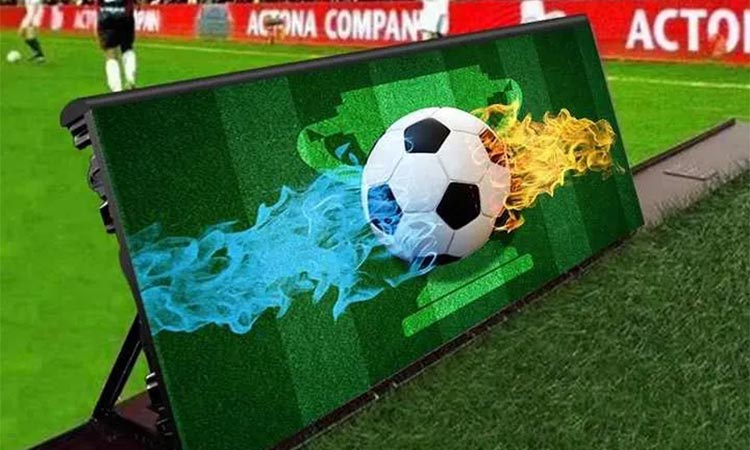
LED Scoreboard Software, Content Control, and Integration
Modern LED display systems have shifted from hardware specifications to intelligent software. LED scoreboard software is not just a timing tool; it can also centrally manage match data, advertising content, and multiple screens.
Integration and control of LED content
The timing and scoring module is the foundation of the entire system. Referees input scores, fouls, and timeouts via a sideline console or tablet; this information is pushed to the display terminal via a local area network, with synchronization latency within the venue typically controlled to within 0.1 seconds. Modern platforms usually have built-in rule templates for more than a dozen sports, such as basketball, volleyball, football, and badminton, supporting functions such as 24-second shot clock synchronization and set switching, allowing the same hardware to adapt to different events without repeated configuration. In addition to match data, the scoreboard LED display software must also include content management system (CMS) functionality.
Software integration and control
Operators can pre-plan program content using a timeline: looping sponsor content before the match starts, displaying scores as transparent overlays above advertisements during the match, and automatically inserting short videos during pauses. A single account can manage multiple screens in different locations, significantly saving manpower.
For large stadiums equipped with a central large screen, strip screens, peripheral screens, and stand information displays, the integrated control center can achieve synchronous scheduling through a unified local area network. At the moment of a goal, the system will simultaneously display slow-motion replay, player close-ups, score updates, and audio triggering within 0.5 seconds. The main control equipment must have a backup mechanism to ensure seamless takeover in the event of a main system failure, avoiding commercial disputes arising from black screens during live broadcasts.
When selecting customizable LED scoreboards, software scalability is just as important as hardware. The system must support custom team logos, fonts, and layouts, and have terminal expansion compatibility so that adding peripheral or circular screens in the future does not require purchasing new licenses. Platforms with open APIs or SDKs can also integrate with ticketing systems, player statistics databases, and video replay devices, thereby consolidating all event data.
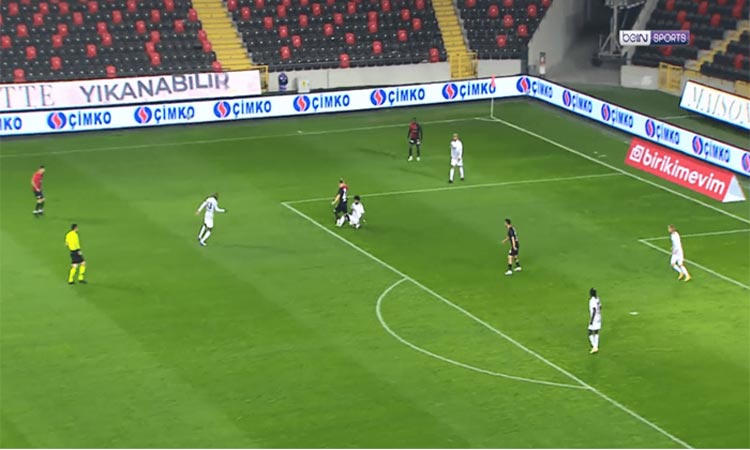
Remote control and real-time scoreboard update system
The choice of control method directly determines the operational efficiency of a venue. Modern remote control scoreboard systems have evolved from traditional on-site manual operation to a multi-layered architecture that supports local wireless networks, IP networks, and cloud platforms, meeting the real-time and management scope requirements of venues of all sizes.
When selecting a system, three key factors must be considered: whether the transmission latency meets the real-time requirements of the event; whether there are local caching and automatic recovery mechanisms to cope with network interruptions or equipment failures; and whether the software platform supports future expansion and integration with third-party systems. The stability of the control system is often more crucial than hardware specifications in determining whether a live event can proceed smoothly.
Commercial and Warranty Terms
When evaluating LED scoreboard prices, buyers often focus only on the unit price of the display panel, neglecting hidden costs. A comprehensive quotation must list the costs of the display panel, steel structure and installation, shipping and insurance, and destination duties and charges. Steel structure and installation typically account for 20% to 30% of the total investment; for outdoor column-mounted installations involving foundation construction and wind load calculations, this percentage can be even higher. Furthermore, international trade terms must be clearly specified, as different delivery methods (e.g., FOB, CIF, or DDP) directly determine the buyer's subsequent logistical and customs clearance responsibilities.
Warranty Terms
Warranty terms are a key indicator of a supplier's overall service capabilities. Industry standard warranties are typically two to three years, covering display panels, power modules, control cards, and basic software functions. For some high-end custom LED scoreboard projects, suppliers may offer three to five years of warranty on core components, with extended warranty options available. Buyers should confirm that the warranty plan does not include on-site labor costs and verify whether remote diagnostic support is provided for overseas projects. Regarding module replacement response time, reputable manufacturers should commit to shipping within 48 hours of receiving notification of a failure. For professional sporting events or large-scale activities, customers are advised to reserve spare modules equivalent to 2% of the total number of modules to handle emergency replacement needs.
Software upgrade
Software upgrades can impact long-term operating costs. Basic control software updates and bug fixes are typically provided free of charge during the warranty period, but advanced features such as new advertising management systems, multi-screen synchronization modules, or third-party data interfaces may require additional payment. Before signing a contract, the purchaser should clearly define the scope of services and pricing rules for software upgrades to avoid future disputes.
FOB, CIF, or DDP
For orders of customizable LED scoreboards, the production cycle depends on the complexity of the customization. Standard-sized products with regular pixel pitch typically require two to four weeks for delivery; while for custom projects involving irregular shapes, special surface treatments, multi-faceted displays, or integrated specific sensors, the production cycle may extend to six to eight weeks or even longer. Contracts must clearly specify milestones for each stage, including timelines for design confirmation, approval, mass production, and factory inspection, to ensure alignment with venue construction or event schedules.
Frequently Asked Questions
Does the price of the Q1 LED scoreboard include installation and steel structure?
No. The price of an LED scoreboard typically only includes the display panel; steel structure and installation costs are separate and usually account for 20% to 30% of the total investment. When requesting a quote, please ask the supplier to provide a detailed breakdown of costs to avoid exceeding your budget later.
Q2 Can a single LED video scoreboard support both football and basketball modes simultaneously?
Yes. Modern LED video scoreboards come with various sports templates, and the software supports one-click switching without the need to replace hardware.
Q3 What is the standard warranty period for outdoor LED scoreboards?
The industry standard warranty for outdoor LED scoreboards is two to three years, covering the display panel, power supply, control card, and basic software. Some manufacturers offer a three-year warranty on core components and provide extended warranty options. Overseas customers should confirm whether the warranty includes on-site labor costs, remote diagnostic support, and spare parts shipping. For professional sporting events, it is recommended to maintain a 2% stock of modules locally for rapid replacement in case of emergency failure.
Q4 Can the control software of the existing monitor be upgraded independently?
Existing hardware can be upgraded independently via LED scoreboard software, provided the interfaces are compatible. Basic updates are usually free during the warranty period, while advanced features such as advertising management modules may require additional payment.
Q5 What is the production and delivery timeline for the custom LED scoreboard?
The delivery time for standard customizable LED scoreboards is two to four weeks. For custom projects involving irregular shapes, special surface treatments, or multi-faceted displays, the delivery time extends to six to eight weeks. Contracts must clearly specify milestones such as design confirmation, sample approval, mass production, and factory inspection, and allow time for transportation and customs clearance to ensure delivery aligns with venue construction or event schedules.
in conclusion
Are you still comparing prices for LED scoreboards? Or do you need to configure sideline displays for your venue? Please send us at Topviewled your venue dimensions and sports type, and we will reply to you within 24 hours with a complete specification sheet and detailed quotation.