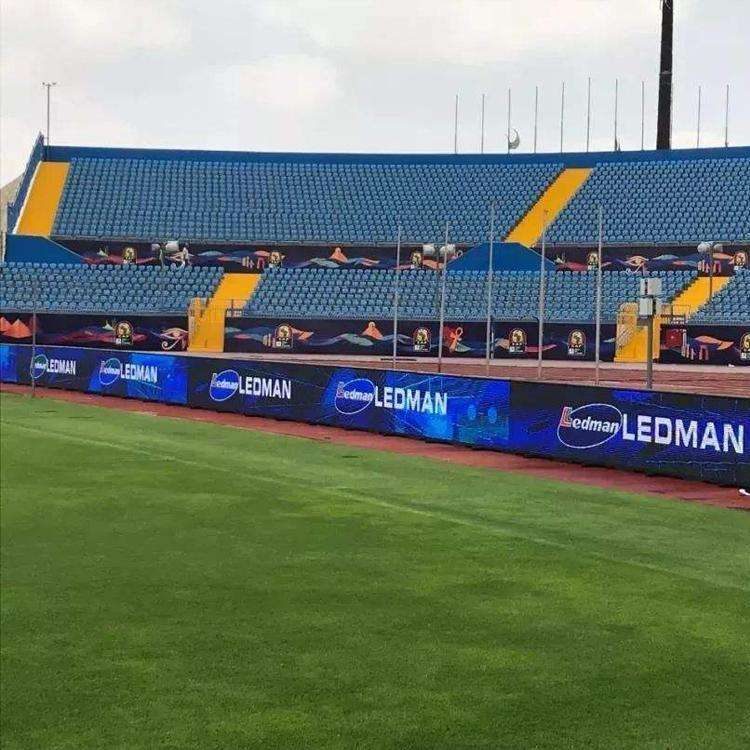
Stadium LED Display is a visual specification system for LED displays in sports stadiums that unifies the visual expression of all types of LED displays within the stadium and enhances the visual experience of sports events.
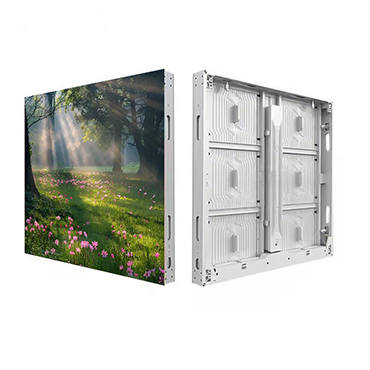
Pixels: p5.31-p12
Viewing Angle: 160°
Resolution: 3840×2160 (4K)
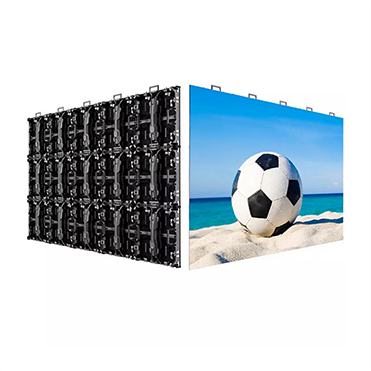
Pixel count: P3.076
Size: 320mm x 160mm
High resolution: 3840Hz
| Model | P4 | P5 | P8 |
|---|---|---|---|
| Pixel Pitch | 4mm | 5mm | 8mm |
| Color Configuration | SMD 3in1 1R1G1B | ||
| Module Size | 320 x 160mm | ||
| Module Resolution | 80 × 40dots | 64 x 32dots | 40 x 20dots |
| Cabinet Size | 640mm x 640mm/960mm x 960mm or customized | ||
| Driver Mode | 1/10 Scan | 1/8 Scan | 1/5 Scan |
| Cabinet Material | Iron or Die cast aluminum | ||
| Brightness | 4000-7000cd/㎡ | ||
| Max Power Consumption | 1200W/㎡ | ||
| Average Power Consumption | 400W/㎡ | ||
| Refresh Rate | 1920Hz/3840Hz | ||
| Grey Level | 16Bit | ||
| Certifications | CE, ROHS, ISO9001 | ||
| View Angle | Horizontal 140° Vertical 140° | ||
| Screen Control Method | PC or Mobile Phone | ||
| IP Rating | IP65 | ||
| Input Voltage | AC110V-220V,50Hz-60Hz | ||
| Temperature-operating | -10℃-60℃ | ||
| Life Span | |||
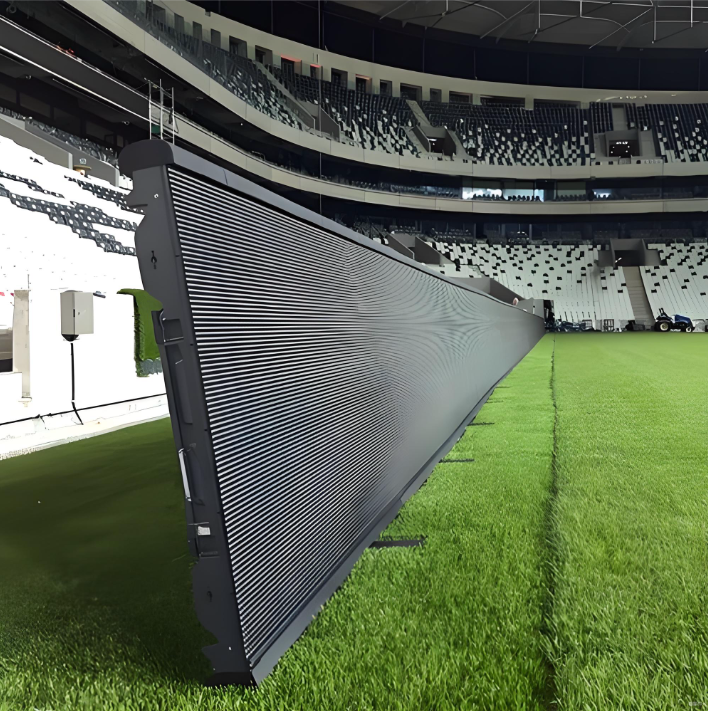
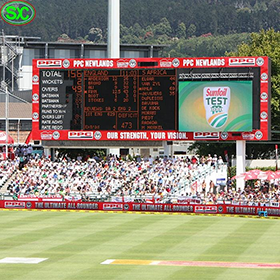
System roll rate for the LED screen for tennis events is usually high and the high contrast will allow really good visibility of the scores, hawkeye replays and sponsor’s advertisements. Its modular design fits for stadium fence or high altitude hanging, along with high protection grade to keep stability in strong light or rainy day, which boosts visual impact on spot.
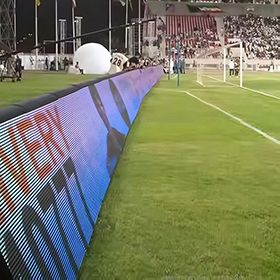
Court Giant Screen LED: high refresh and brightness, HD play of goals, real-time scores, super visual effects, bring on the heat in the court!
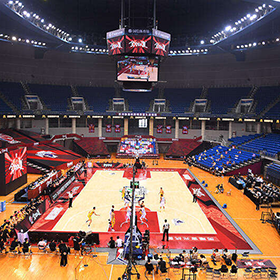
360° all-around viewing with no blind spots, high-definition real-time scores, and stunning replays, creating an NBA-level viewing experience.
There are three types of outdoor soccer field advertising displays: advertising screens, outdoor LCD screens, and LED mobile outdoor advertising.
1. The advertising screen image is fixed and cannot display dynamic video.
2. Poor nighttime display effect, with a blurry image.
3. Materials age within two years in outdoor environments.
4. Insufficient wind resistance, requiring additional weight, and demanding installation requirements.
1. Outdoor LCD screens are exposed to direct sunlight in summer, resulting in high internal temperatures. Poor heat dissipation leads to screen overheating and blackouts. Prolonged high temperatures accelerate equipment aging, with brightness decreasing by more than 30% within a year.
2. Screen cracking may also occur. In low-temperature environments, especially in frigid regions, the equipment is difficult to start up, has a slow response time, and may become unusable. Rain, moisture, dust, and salt spray are the biggest problems for outdoor LCDs.
3. As the internal sealant ages, moisture can cause short circuits, rendering the equipment unusable and resulting in economic losses.
4. Higher electricity costs. High brightness requires high power, leading to high power consumption. 5. High maintenance costs. The equipment is essentially unusable after the panel is damaged. Modules cannot be replaced individually. Repair costs are high.
6. Moreover, in Middle Eastern countries, direct midday sunlight makes LCD screens unreadable.
1. LED outdoor mobile advertising machines do not suffer from the low brightness and short lifespan issues of screen advertising machines and outdoor LCDs.
2. LED outdoor mobile advertising machines can be moved at any time. Unlike LCDs, the glass material will not be damaged during movement.
3. Under direct sunlight, the display effect of LEDs is brighter than that of LCDs and advertising screens.
4. LED brightness can reach 8000 Hz, providing clear display even under direct sunlight. The screen supports 3840Hz refresh rate high-definition video. The LED screen has a 160° beam angle. Suitable for high-traffic areas such as shopping malls, store openings, and auto shows.
5. LED outdoor mobile advertising machines have an IP65 waterproof rating. Unaffected by water and dust, and shockproof. Sunlight exposure, typhoons, and rough roads do not affect operation.
6. No need to replace materials. High cost-effectiveness for long-term use. Equipped with 365° omnidirectional wheels for easy movement. One-click content publishing from mobile phone. Built-in speaker interface.
The biggest difference is the protective design. Stadium screens typically have a soft cover and a protective pad at the top. This is to prevent players from running off the field and hitting the screen, which could result in serious injury, and also to protect the LED chips from damage caused by objects such as balls.
Sporting events are typically broadcast live or recorded by professional cameras. A refresh rate of 3840Hz or higher is necessary to ensure flicker-free, scanline-free images on camera, guaranteeing that the picture seen by television viewers is as clear as if they were at the stadium.
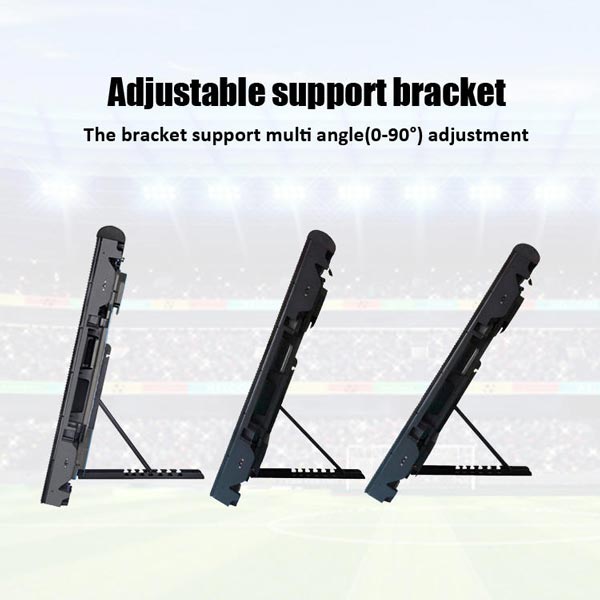
Yes. Quality fencing screen support structure design usually allows for 60° – 90° angle adjustment to make sure each fan in the stands as well as the field broadcast camera will have the best viewing angle.
Outdoor screens must have an IP65 or higher protection rating. In addition, to cope with extreme high temperatures, the screen should have a built-in high-efficiency heat dissipation system and a UV-resistant design to prevent the shield from yellowing or deforming under intense sunlight.
The theoretical life of optional LED chips is 100,000 hours (about 11 years) in standard working environment; however, the actual life span was influenced by outdoor environment, stability of electricity and maintenance.

Shenzhen Topview Display Technology Co., Ltd. is a leading LED display manufacturer in China. If you need an excellent LED display factory, Topview Led Display is your first choice. Please send us your detailed requirements so we can provide you with a quote immediately.