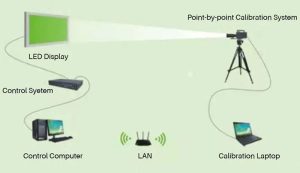
What is 32K resolution?

Ultra High Definition Visuals Delivered By 32K Resolution
32K resolution refers to a display or multimedia format with 30,720 horizontal pixels and 17,280 vertical pixels, totaling 5,308,4160 pixels.
It is four times the resolution of 16K, sixteen times that of 8K, and sixty-four times that of 4K. Higher resolution equates to greater clarity. Currently, 32K resolution represents the pinnacle of resolution technology.
The Evolution of 32K Resolution
Compared to mainstream 4K and 8K resolutions, 32K resolution emerged later due to its extremely demanding hardware requirements. It remains largely uncommercialized today. Below is a timeline of its development:
- September 2017: Sony launched the VENICE full frame digital cinema camera system, capable of capturing 6K resolution video on a 36x24mm sensor.
- October 2017: RED Digital Cinema introduced the Monstro 8K VV full frame sensor, enabling 8K video capture at 60 frames per second. The development of these systems and products laid the groundwork for 32K resolution advancement.
- In 2020, Teledyne DALSA’s Linea HS 32k CMOS TDI camera won the Platinum Award. This camera primarily achieves 32K resolution by capturing two 16K resolution images and then digitally reconstructing them at a 2.5μm pixel size.
- From 2022 to 2024, Teledyne DALSA enhanced the Linea HS 32k CMOS TDI camera’s capabilities, showcasing its upgraded version and demonstrating the increasing maturity of 32K hardware.
- As of 2026, native 32K hardware remains unavailable. However, tools like the Aiarty Image Enhancer employ AI driven upscaling technology to simulate 32K resolution images from 8K input sources. With ongoing technological advancements, 32K resolution is expected to become part of our daily lives in the future.
What are the advantages of 32K resolution?
Ultra High Definition
32K resolution delivers unparalleled clarity, enabling displays with this capability to render every minute detail with exceptional sharpness.
Images created at 32K resolution maintain such ultra high definition that even when magnified 50 times, intricate details remain clearly visible.
Immersive Experience
When viewing content on a 32K LED display, the lifelike textures and highly accurate color reproduction create an incredibly realistic sensation. You’ll feel as though you’re truly immersed within the scene, with your emotions resonating with the unfolding visuals.
Unparalleled Detail

32K Resolution Delivers Flawless Detail
32K resolution surpasses lower resolutions in detail rendering. In medical diagnostics, a 32K display reveals intricate details invisible to 4K or 8K systems without any graininess, enabling more precise analysis and reducing misdiagnosis risks.
What Are the Technical Challenges of 32K Resolution?
32K resolution has diverse applications, such as in camera lenses and hard drives storing 32K files. However, it presents significant technical hurdles, which I will elaborate on below.
Hardware Requirements
Given the immense data demands and technical complexity of 32K resolution, sensors supporting this high resolution must enhance their Modulation Transfer Function and Signal to Noise Ratio.
This enables the capture of high resolution details, ultimately producing clearer 32K content with superior signal quality.
Enhancing a sensor’s MTF and SNR necessitates patented super resolution technology. Currently, this technology has only been implemented in Teledyne DALSA’s Linea HS 32k camera.
As this technology remains immature, sensors supporting 32K resolution still face numerous challenges.
Data Bandwidth
Playing 32K resolution video at 60 frames per second in uncompressed 10 bit color depth using 4:4:4 RGB format requires approximately 936 Gbps of bandwidth far exceeding the bandwidth capacity of current mainstream interfaces.
Even interfaces like DisplayPort 2.1 or Thunderbolt 5, which support 80-120 Gbps bandwidth, cannot drive 32K resolution transmission signals without employing high ratio display stream compression.
Storage Challenges
A single minute of uncompressed 32K video at 10 bit color depth requires approximately 7TB of storage space. Professional workflows utilizing 12 bit color depth, 32K video demand even greater storage capacity.
To store and edit 32K resolution video, compression ratios of 1000:1 or higher are essential. Since 8K intermediate codecs typically use 10:1 to 20:1 compression, 32K video poses significant storage challenges.
Manufacturing Costs
Producing display panels supporting 32K resolution involves extremely complex manufacturing processes. Designing their driver circuits and components presents numerous unforeseen challenges.
Additionally, manufacturing larger LED displays and image sensors with extremely high pixel counts represents a massive undertaking, incurring extremely high costs.
Compatibility
Currently, most graphics cards, processors, and software cannot meet the demands of 32K resolution. It requires substantial storage capacity and rapid transmission speeds, making it supported only by a limited number of high end devices.
It is primarily used in specialized, high end custom projects such as virtual production and giant LED displays.
Practical Applications of 32K Resolution
Giant Displays

16K Resolution Giant Ball In Las Vegas
While theoretically achievable, the exorbitant cost limits current giant displays to 16K resolution (e.g., the Las Vegas giant sphere). Future advancements may bring 32K giant displays.
Virtual Production
Employing virtual production technology in filmmaking significantly reduces time and costs.
A 32K resolution LED wall for virtual production renders scenes indistinguishable from real world environments, seamlessly integrating actors with backgrounds without any artificial feel.
Its greatest advantage lies in its flexibility: switching scenes on the LED video wall instantly replaces locations, eliminating the need for physical set changes and offering unparalleled convenience.
Blu-ray Movies
Blu-ray movies utilize blue laser technology to store high definition content on high capacity discs. Blu-ray offers exceptionally high image quality, with some titles achieving 32K resolution.
This resolution delivers unparalleled detail, making scenes appear as if unfolding before your eyes. It fully captures your attention, immersing you in the cinematic world.
VR and AR
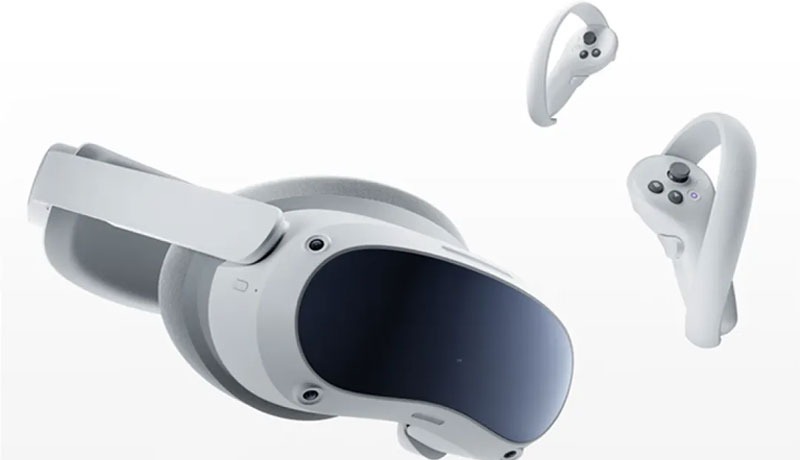
VR Devices With 32K Resolution
In VR and AR, 32K resolution achieves “human eye level” immersion. The Varjo XR 4VR device, released in 2023 effectively simulates 32K resolution in the focal area, matching human visual acuity and eliminating the “screen door effect.”
This makes the world experienced within the VR device indistinguishable from our real world.
Video Editing Software
When performing significant cropping or scaling of 32K video or images in editing software, there’s no need to worry about blurring. The final edited footage remains exceptionally sharp and distortion free.
Moreover, it preserves minute details, offering significant advantages for post production film editing.
However, due to hardware and technical limitations, only DaVinci Resolve Studio currently supports editing 32K resolution video. Other familiar editing tools, such as Adobe Premiere Pro and Final Cut Pro, only handle 8K resolution footage.
The Future of 32K Resolution
32K resolution promises unprecedented clarity and immersive visual experiences. Tools like Aiarty Image Enhancer and Topaz Gigapixel AI already leverage deep learning algorithms to achieve such effects.
It’s anticipated that manufacturing breakthroughs will soon make 32K displays the ideal choice for professional technical applications.
However, widespread adoption of 32K resolution among ordinary consumers faces significant economic hurdles.
Its equipment costs far exceed those of lower resolution devices, limiting its application primarily to professional industrial and research fields and drastically narrowing its scope.
Furthermore, the future scarcity of native 32K resolution content poses a critical issue.
Capturing and producing such content demands substantial resources and time, while playing native 32K content smoothly requires exceptionally high performance hardware.
Summary
The above covers the advantages, challenges, and prospects of 32K resolution, aiming to provide a comprehensive understanding of this technology.