
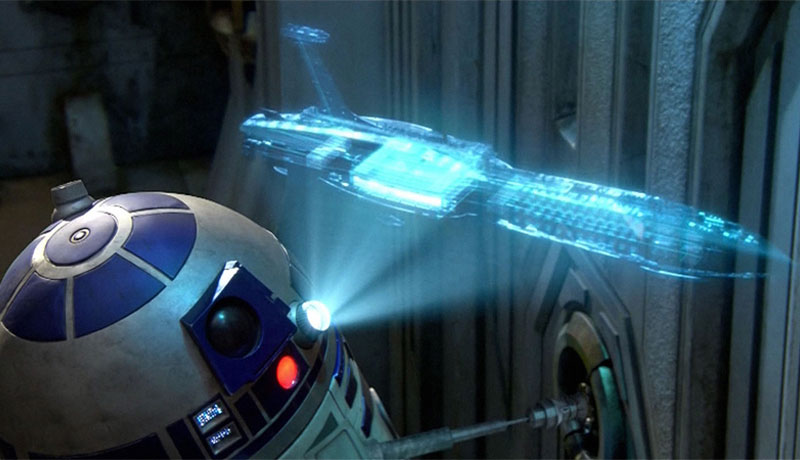
Although the term “hologram” has been in use for a long time, it actually derives from the Greek. ‘Holos’ means “whole,” and the suffix “-gram” signifies “writing.”
Thus, in ancient Greece, “hologram” referred to a technique for engraving a complete image onto an object.
From ancient Greece to the present day, holograms typically refer to the projection of a three-dimensional image suspended in space. This is achieved by using a reference beam and an object beam reflected off a real physical object.
This three-dimensional image does not require an LED display or any other screen to be presented; we can clearly see its contents with the naked eye. Holograms are commonly used in scientific, social, and creative fields.
3D holograms represent an advanced iteration of holography, composed of multiple two-dimensional images arranged in a specific sequence.
Primarily formed by the interaction of lasers and other light beams creating a light field that passes through an object, 3D holograms produce a three-dimensional image that appears to float in mid-air.
This creates a stronger sense of depth, as if the object were right before our eyes, allowing detailed observation from multiple angles.
3D holograms encompass various types, including laser holograms, digital holograms, and computer-generated holograms.
Before choosing between a hologram and a 3D hologram, it’s essential to understand their distinctions. Let’s explore them below.
Holograms have limited viewing angles; you must view them from specific positions to see clear 3D images.
3D holograms offer unrestricted viewing ranges with flexible angles, typically achieving 360-degree visibility. No matter your perspective, you’ll see complete, lifelike images.
If broader viewing angles are essential, 3D holograms deliver superior viewing experiences.
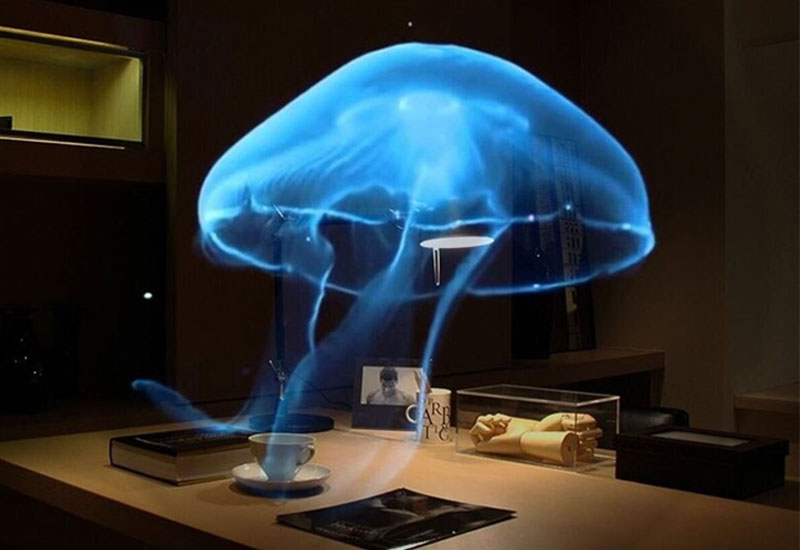
Holograms rely on the parallax effect to convey depth, resulting in less pronounced depth characteristics. Consequently, they offer a less immersive experience and are unsuitable for rendering information about three-dimensional space.
In contrast, 3D holograms deliver superior depth perception. For instance, when displayed on an LED screen, 3D holograms create a more authentic and lifelike sensation.
In practical experience, 3D holograms deliver superior depth perception, creating lifelike visuals.
Holograms and 3D holograms differ significantly in interactivity. Holograms cannot interact with viewers, while 3D holograms offer greater interactivity and engagement. Users can move holograms with fingers or palms to access additional image information.
Comparing interactivity between holograms and 3D holograms, the latter offers superior engagement capabilities, significantly boosting audience participation.
Holograms are typically presented on holographic film or photosensitive materials, while 3D holograms require specialized holographic displays to project images, such as transparent LED screens or holographic invisible screens.
You can choose based on your specific needs. Whichever image presentation method is simpler for you is the one to select.
Holograms are created using a reference beam and an object beam. When the object beam illuminates an object, scattered light hits the photosensitive material.
Simultaneously, the reference beam strikes this material, generating an interference pattern. When a laser beam is directed at this interference pattern, the holographic image appears.
From the above, we understand that 3D holograms are composed of numerous two-dimensional images and rely on the object’s light field to present a three-dimensional image.
The creation methods for these two types of three-dimensional images are quite similar. You can choose either based on your personal preference.
Since holograms lack interactive functionality, users can only view the content on the image without performing actual operations. Consequently, the viewing experience lacks a deeper sense of immersion.
3D holograms differ significantly. They support user input and interaction with the image, immersing viewers in a three-dimensional world and delivering an exceptional immersive experience.
If you seek an immersive experience, 3D holograms are an excellent choice.
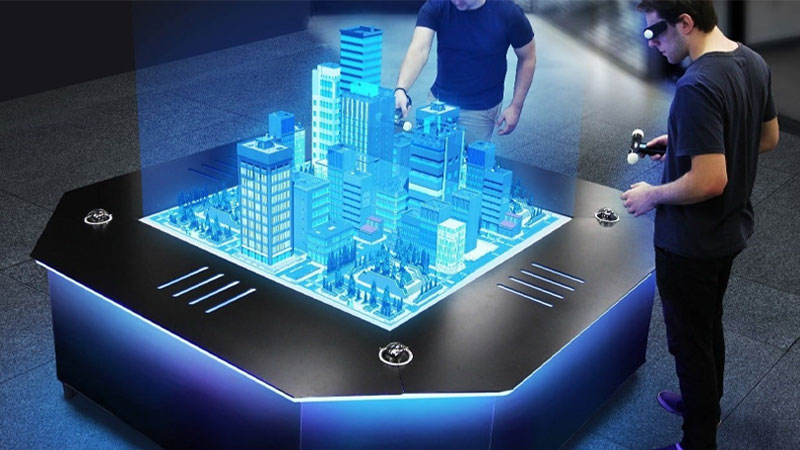
Both holograms and 3D holograms offer comparable image reproduction capabilities. Both offer significant flexibility and creativity, enabling you to present objects, images, and other information in uniquely distinctive ways.
For instance, the iconic World Trade Center Twin Towers in New York City, destroyed in the attacks and irreparably lost, can be projected using holograms and 3D holograms. This allows for a comprehensive view of their original architectural form and intricate details.
Transparent LED displays can achieve effects similar to 3D holograms. Their transparency mimics the effect of 3D holograms, allowing images to be presented without obscuring the surrounding background.
When showcasing new products indoors, transparent LED displays won’t block natural light, allowing customers outside to clearly see the displayed items. This attracts them to enter the store, boosting revenue.
Transparent crystal film LED displays deliver transparent 3D effects for a more stunning viewing experience. Using LED beads with a uniform pixel pitch ensures exceptionally high definition image quality.
Furthermore, its integrated LED display driver design supports flexible cutting, allowing us to customize transparent crystal film LED displays to any screen size as needed.
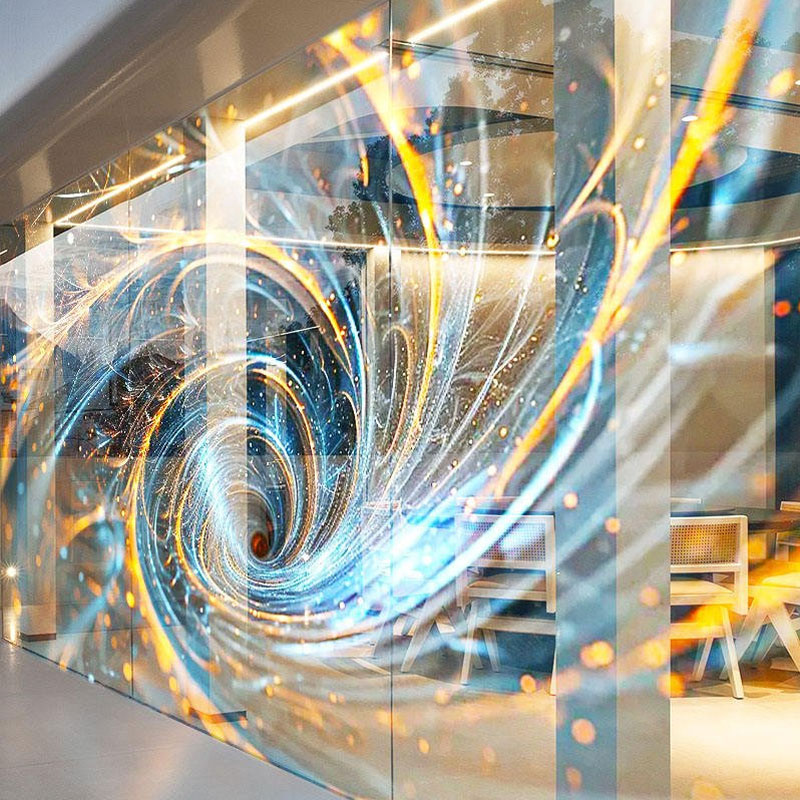
Our holographic invisible screen features transparency and invisibility. It has no frame and requires no mounting hardware. Simply peel off the protective film and apply it to the glass for effortless installation.
When displaying 3D holograms on the Holographic Invisible Screen, you needn’t worry about image quality. It employs 16-bit grayscale to ensure delicate color reproduction.
Furthermore, the static scanning method with integrated light driver technology guarantees stable visuals, preventing flickering or stuttering.
When learning complex abstract concepts, educators use holograms or 3D holograms to transform intricate information into intuitive 3D visuals. This sparks curiosity, boosts engagement, and simplifies knowledge absorption.
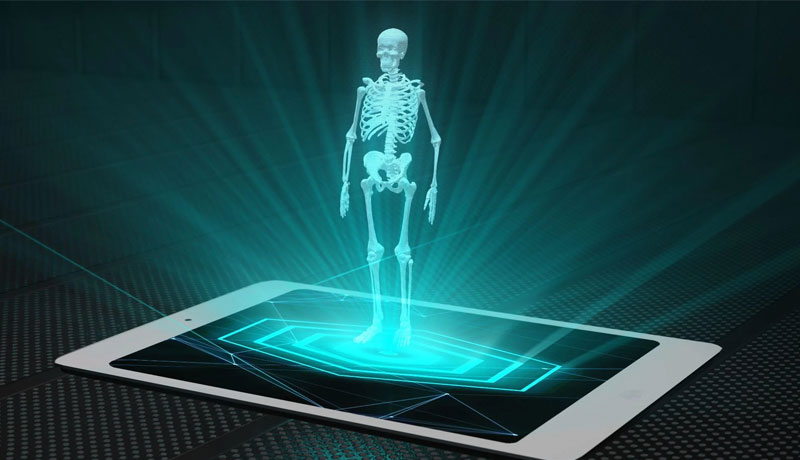
In healthcare, doctors employ 3D holograms or holographic projections to clearly visualize internal organs.
This aids in precise diagnosis and targeted treatment, significantly boosting medical efficiency and accuracy, particularly valuable in neurosurgery and cardiology.
3D holograms and holographic projections are frequently employed in concerts featuring deceased artists.
By creating lifelike 3D projections that seem to merge with the real world, they deliver an innovative interactive experience, immersing audiences in the performance.
With technological advancements, many car dealerships now utilize 3D holograms and holographic displays to showcase vehicles in three dimensions. Customers can examine intricate details and exterior features from every angle.
This novel approach captures attention, heightens product interest, and maximizes conversion rates from audience to consumer.
Using 3D holograms or holographic displays during video calls breaks the limitations of long-distance communication.
They transmit another person’s 3D image from afar to your location while conveying facial expressions and body language. During a video call, you’ll feel as if they’re sitting right in front of you, creating a sense of closeness.
If your budget is tight and you don’t require high viewing angles or interactivity, opt for a basic hologram to showcase your product.
If your budget allows and you seek more stunning visual effects to highlight your product’s advantages, opt for 3D holograms.
Their dynamic imagery enables customers to view from all angles, attracting more potential clients and yielding higher returns in the long run.
This comprehensive comparison of holograms vs. 3D holograms aims to help you select the right holographic solution for your business.
No. A hologram refers specifically to a three-dimensional image created using “holography,” while holographic images can refer to any three-dimensional visual representation.
Yes. Holograms are essentially a more sophisticated form of 3D capture technology. They preserve numerous minute details, making them indistinguishable from the actual object.
Holograms are more prevalent due to their lower cost, making them widely adopted across various fields in daily life.
3D holograms, being relatively more expensive, are typically used in high-end applications and lack the widespread adoption of standard holograms.
No, it supports clear viewing of 3D images without any additional devices.
The purchase cost of 3D holograms is relatively high. This is because the process of creating a 3D image is complex, requiring significant time and effort.
Consequently, the price is comparatively high, and they have not yet been fully adopted by businesses of all sizes.